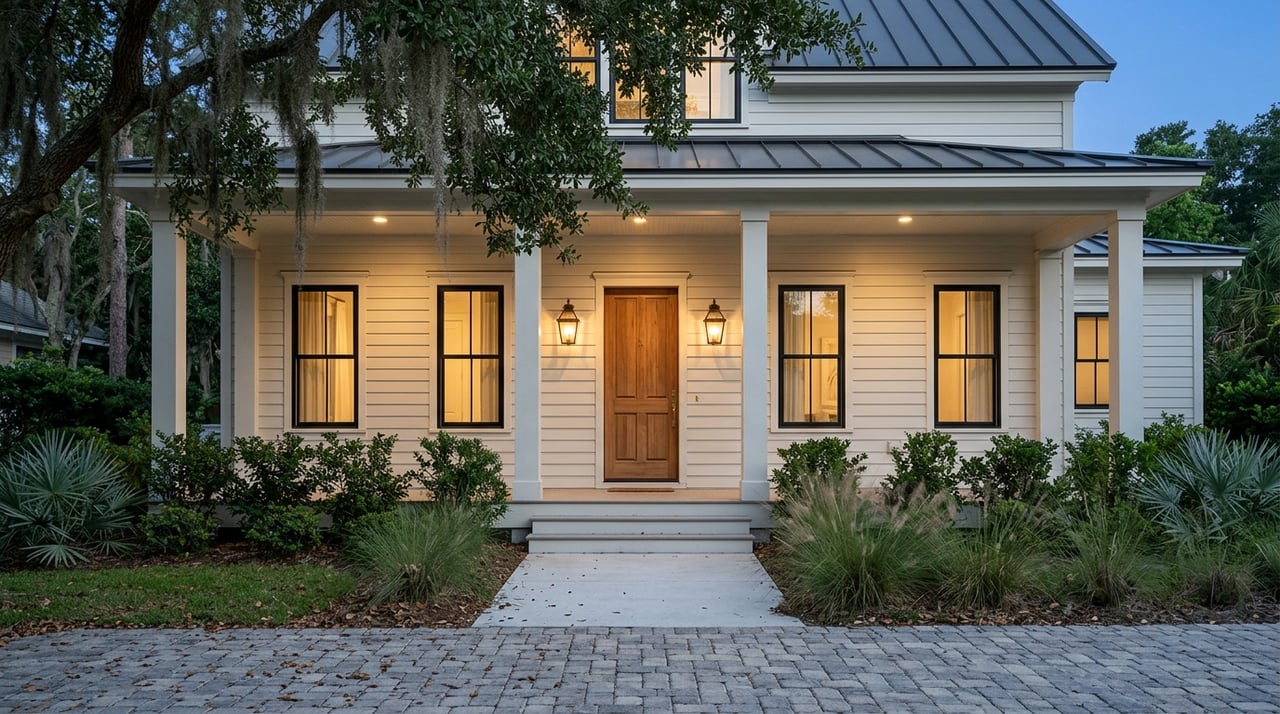
New Construction And Tear-Down Options In Fernandina Beach
May 7, 2026
May 7, 2026
Wondering whether Fernandina Beach is the right place for a custom build or a teardown project? You are not alone. In a barrier-island market where land is limited and regulations can shape what is actually possible, the smartest opportunity is not always the lot that looks best at first glance. If you are weighing a new construction purchase, a replacement-home strategy, or a major renovation, this guide will help you understand where opportunities tend to exist, what can complicate them, and how to evaluate a site with confidence. Let’s dive in.
Fernandina Beach has real land constraints. The city says 42% of its total land area is dedicated to open space, which means buildable opportunities can be more limited than buyers expect.
That is why parcel-level due diligence matters so much here. A lot may appear promising, but zoning, wetlands, flood exposure, historic review, and coastal rules can all affect what you can actually build.
For buyers and investors, that creates both challenge and opportunity. If you know how to screen a property correctly, you can avoid costly surprises and focus on sites with a clearer path forward.
Fernandina Beach’s 2011 reconnaissance-level architectural survey offers a useful starting point. It identified six neighborhood planning areas across the city, including beach-side areas, downtown-adjacent areas, and Southside.
For teardown and major-rebuild strategies, two areas stand out most. The city’s survey found that the Beach North of Atlantic Avenue and Beach South of Atlantic Avenue areas had a high level of alteration and new construction, with little remaining historic integrity.
That does not make every property in those areas a teardown candidate. It does suggest, however, that these beach-side sections may be more workable for replacement homes or substantial redevelopment than the city’s most protected historic areas.
Old Town and Downtown are different. These are Fernandina Beach’s protected historic centers, and both are subject to design guidelines and review standards that can significantly affect renovation, addition, and demolition plans.
If a property is in a local historic district, the city requires a Certificate of Appropriateness before a building permit is issued for work on the structure. Exterior work generally goes through Historic District Council review, and new construction usually requires both conceptual and final approval.
For teardown buyers, this is a major screening issue. In these areas, your first question should not be about design potential. It should be whether preservation review will allow the scope of work you have in mind.
If demolition is part of your strategy, local review becomes even more important. Under the Land Development Code, no building or structure in a locally designated historic district or the Community Redevelopment Area may be demolished without Historic District Council approval, unless a government agency or court overrides it.
The code also creates a 90-day waiting period for demolition permits on structures that are 50 years old or older. During that time, the city can study alternatives and document the building before a permit is issued.
That does not mean demolition is impossible. It does mean your timeline, carrying costs, and overall project plan need to reflect the review process from day one.
Outside historic overlays, single-family opportunities are often shaped by zoning and lot geometry. The city’s most relevant residential districts for this discussion include RE, R1-G, R-1, RLM, R-2, and in some cases R-3.
Most of these districts cap building height at 35 feet, while R-3 allows 45 feet. Setbacks vary by district, so two similarly sized lots can have very different build envelopes depending on zoning and shape.
This is where many buyers get tripped up. A wide, shallow lot or an irregular lot may fit far less house than expected once setbacks are applied.
In certain built-out areas, Fernandina Beach also uses a context-sensitive setback process for block faces. On streets where neighboring homes already sit closer to the street, that can make infill or replacement more workable than a strict base-zoning reading might suggest.
In Fernandina Beach, flood and coastal controls are just as important as zoning. The city’s flood-protection resources allow property-specific review of flood zone, Base Flood Elevation, and Design Flood Elevation.
That information can affect design, elevation planning, construction cost, and long-term insurance considerations. It is not just a permitting issue. It can directly influence whether a property makes financial sense as a renovation or replacement project.
The city also states that residentially zoned properties within 1,000 feet of the Coastal Construction Control Line cannot exceed 35 feet in building height. For buyers planning a taller coastal design, that rule can materially change the concept.
There is also an insurance angle worth noting. Fernandina Beach has a Class 5 Community Rating System rating, which the city says results in a 25% flood-insurance discount in a Special Flood Hazard Area and up to 10% in Zone X.
If you are deciding whether to renovate or start over, a simple framework can help. In Fernandina Beach, the best answer usually comes from the entitlement path first and the design vision second.
Start with these questions:
Once those answers are clear, you can compare whether renovating the existing structure is practical or whether replacement is the cleaner path. In many cases, the right choice is the one that best aligns with current code, manageable construction complexity, and a straightforward review process.
In this market, sequence matters. If you analyze the design vision before the property constraints, you risk spending time and money on a concept that cannot be approved.
A practical review sequence for Fernandina Beach looks like this:
The city’s GIS tool is built for this kind of screening. It includes parcel dimensions, plat lines, FEMA flood zones, wetlands, the Coastal Construction Control Line, zoning classifications, and future land use data.
Before you get too far into planning, confirm jurisdiction. If the property is inside Fernandina Beach city limits, permits are processed through the city’s online permitting system.
If the site is outside the city in unincorporated Nassau County, the county building department handles permits, plan review, and inspections. That split matters because it can affect process, review path, and timing.
For buyers under contract, this is a detail worth confirming early. It can influence your inspection strategy, due-diligence timeline, and consultant team.
For luxury buyers, second-home owners, and investors, resale should still be part of the conversation. Fernandina Beach’s housing profile shows an 80.5% owner-occupied rate, a median owner-occupied value of $555,400, and 90.3% of residents living in the same house one year earlier.
That points to a relatively stable owner-occupant market. In that kind of environment, homes tend to benefit when they are easy to insure, manageable to maintain, and aligned with neighborhood context and local code.
In practical terms, the strongest resale candidates are often the ones with a clear entitlement path, a lot that comfortably fits the desired home, manageable flood exposure, and fewer avoidable review hurdles. In Fernandina Beach, those fundamentals can matter just as much as finishes and square footage.
A teardown or custom-build purchase is not just about finding a beautiful address. It is about understanding what the site can support, what the approval path looks like, and how those details affect both cost and long-term value.
That is especially true in a coastal market like Fernandina Beach, where design vision, zoning discipline, and project management all need to work together. When you evaluate the right variables in the right order, you can make better decisions and move forward with much more clarity.
If you are considering a custom build, a teardown opportunity, or a high-end renovation in Fernandina Beach, working with an advisor who understands both the numbers and the build process can make the path far smoother. To explore your options with a boutique, concierge-focused approach, schedule a complimentary consultation with Trusha Shah.
Stay up to date on the latest real estate trends.
I am committed to guiding you every step of the way—whether you're buying a home, selling a property, or securing a mortgage. Whatever your needs, I've got you covered.